Digital experience work that actually matters
By Scott Ewings, Chief Strategy Officer, Aer Studios

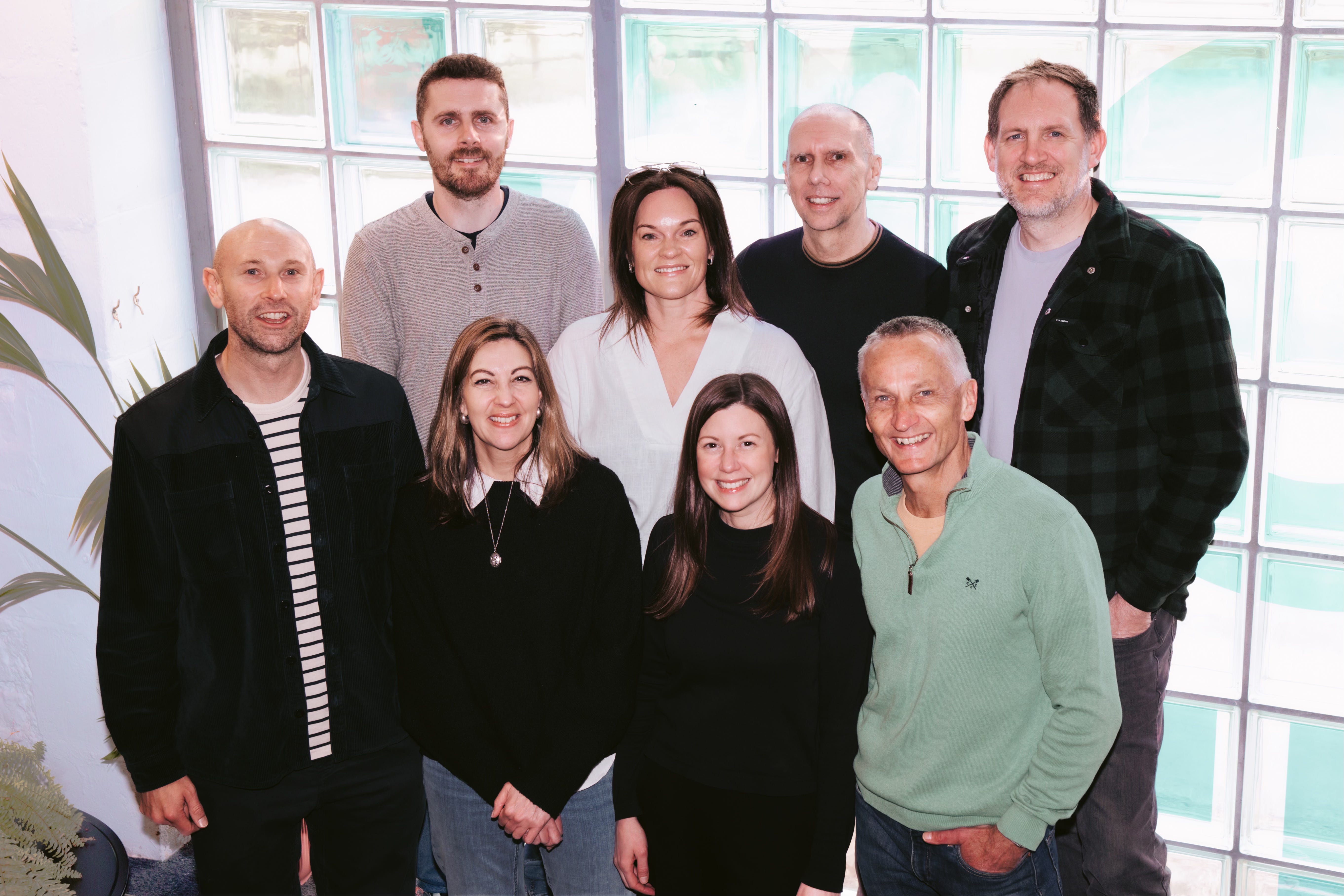
I’ve spent the better part of thirty years of my life in and around digital agencies. I’ve been privileged to have helped, launched, transformed, and scaled quite a few now, and I’m proud to have been involved with each and every one.
I’ve worked with some of the most recognisable brands on the planet and some of the most quietly remarkable organisations you’ve never heard of. And after all of it, I keep arriving at the same conclusion - the work that stays with you, the work that actually means something, is never the work that was the most technically impressive or the most commercially lucrative. It’s the work that actually moved people. The work that changed something. The work where the stakes were really high and delivery meant something more than “let’s just get this thing out”.
That’s why joining Aer Studios feels less like a career move and more like a homecoming for me. It’s a studio that has built something genuinely distinctive - a team that uses creative technology not as a means to win awards, but as a means to accelerate impact for organisations whose missions actually matter.
Joining Aer Studios comes at exactly the moment when I believe the industry is at a crossroads that demands we all make a decision. Not about what side of the industry debates we’re on - but what we want our contribution and impact to be.
So here is my unvarnished take on where we are at - 6 things I’ve been stressing about for years - and what I’m going to do about it.
1. The gap between strategy and action is where great ideas go to die
The organisations I admire most are drowning - not because they lack ideas, but because they have a surplus of them and many never move to execution.
I’ve sat in too many rooms where brilliant people have spent months producing beautiful strategy decks, only to find themselves paralysed by the gap between the vision on slide 47 and the operational reality of Monday morning. We’ve created an entire consulting industry built on the delivery of insight, and somewhere along the way we forgot that insight without execution is just very well-formatted procrastination.
This is the “the road most travelled” in the digital experience, products and services industry. You hire a strategy consultancy to tell you what to do. Then you hire an agency to help you do it.
Then you discover the strategy was built without sufficient understanding of what’s actually buildable, and the agency was briefed without sufficient understanding of why any of it matters.
The result is expensive, slow, and often deeply unsatisfying for everyone involved.
I’ve spent my whole career operating in the space between strategy and delivery - and I’m convinced that the most valuable thing a studio can offer right now is the ability to hold both simultaneously. To shape the brief and build the answer. To understand the mission at the organisational level and translate it into a digital experience that moves real people to real action.
My philosophy has always been simple - the fastest route to positive impact is the one where you actually build something. Believe it or not, that’s still not a common capability. But it’s exactly where Aer Studios sits.
I’m not interested in adding another layer of strategic abstraction to already over-consulted organisations. I’m interested in closing the gap between ambition and action - quickly, intelligently, and in ways that generate real, measurable proof that the work is working.
That’s the standard I hold myself to, and it’s the standard I’ll hold us to at Aer.
2. The audience engagement crisis is real, fixing it isn’t a nice-to-have
Let me be direct about something - the digital experiences that mission-driven organisations are delivering to their audiences are, in far too many cases, failing them.
Charities are watching donor engagement erode. Cultural institutions are losing relevance with younger audiences faster than they can commission research about it. Public sector bodies are publishing content into a void.
Fundraising organisations are now struggling to serve radically different donor cohorts with compatible communication and engagement approaches. The problem is that audiences (and the interfaces we use to interact with them) have fundamentally changed - their expectations, their attention spans, their relationship with institutions, their tolerance for digital experiences that still feel like they were built in 2014.
Meanwhile, the average donor in the UK is still 64 years old, typically making only two charitable gifts a year. This audience is literally disappearing soon - the sector needs to get serious about attracting and locking in the donors of the future.
That’s why the word “crisis” is directly relevant to audience engagement - the challenges are existential. Every visitor who doesn’t donate, every citizen who doesn’t engage, every supporter who quietly lapses represents a real-world cost to a real-world mission.
This is, of course, recognised and taken seriously by every single fundraising organisation. But all too often initiatives to address the challenge are siloed in the organisation, executed piecemeal, relegated to individual business cases, or assumed to be solved by the next big campaign. A cohesive strategy with cohesive execution across the organisation is what’s needed - with beautiful and useful user experience naturally!
Effective audience engagement is the defining challenge for every client sector we work in at Aer Studios.
Helping our clients develop actionable solutions, set themselves up as an effective engagement operation, and design engagement experiences that sustain interaction using the formats their audiences use isn’t just a service we offer - it’s why we get out of bed every day.
Everything we do at Aer Studios is in the service of tackling this crisis head-on.
3. “Purpose-driven” has become a badge. It needs to become a behaviour
Over my career, I’ve watched the language of purpose get stretched to the point of meaninglessness.
Every agency now claims to care about positive impact for people and the world - and you know what? Some of them genuinely do care, and some of them just don’t. Every pitch deck references sustainability and inclusion. Every credentials document has a section on values. The boxes on “saying the right things” are ticked.
And yet, organisations don’t need partners who say they care - they need partners who understand the weight of their missions and gear themselves absolutely to advancing the cause. Partners who feel the urgency of a cancer research charity trying to move people to donate, or a heritage institution trying to make history feel alive for a generation raised on immersive media.
Sadly, these organisations are still too often paired with agencies that treat them like any other client with a brief and a budget.
I believe mission alignment has to be structural, not cosmetic. It has to shape the helpful capabilities you offer, the people you employ, which clients you take on, which clients you don’t, how you commercially invest in the outcome, what success looks like, and how you measure it.
Our work with Dogs Trust helped to rehome over 10,000 dogs. Engagement with help pages increased by 65%. Website income grew by 35%. That’s what mission-aligned creative technology actually looks like when it’s done properly.
So at Aer Studios, we’re not going to just say we deliver impact. We’re going to demonstrate it - with numbers, with outcomes, with the kind of evidence that makes the case undeniable.
4. AI is a tool. It is not all there is. Stop pretending otherwise.
I’ve watched the AI conversation consume the industry for - well it feels like forever.
Certainly, right now the conversation feels like an endlessly cycling argument between advocates and detractors (and isn’t that just like life in 2026?).
I’ll admit to a growing impatience with the way it’s being handled on both sides of the debate.
The doom-mongers are wrong - AI is not going to replace the human judgement, creative instinct, and genuine empathy that great digital work requires.
But the sunny-side up evangelists are equally wrong - deploying AI because you can, or being told you must, without asking whether you should, or what problem it actually solves, is not innovation and may well deliver unintended consequences.
My view is pragmatic and, I think, increasingly urgent - AI should be in service of human missions and causes, not the other way around.
The question I want us to be asking - at Aer and across the sector - is not “how do we use AI?” but “what do our clients, their audiences, our people and our planet actually need, and how does AI help us get there faster and better?”
That’s a different conversation, and I believe it naturally leads to very different decisions.
It also happens to be a conversation that requires the kind of deep domain knowledge and mission understanding that takes years to build.
Human creativity, empathy, and critical thinking - meet AI - that’s a partnership I want to foster at Aer Studios.
5. The best creative technology is invisible
There’s a tendency in our industry to celebrate the technology itself - the volumetric video, the AR overlay, the immersive experience - as the point of the work.
I understand the impulse. These capabilities can be genuinely extraordinary - and they can become a shiny thing to chase and covet.
But I’ve always believed that the measure of great creative technology is not how impressive it is in isolation - it’s how completely it disappears into the experience it’s enabling.
When it’s working, the user isn’t thinking about the technology. They’re thinking about the story. They’re feeling the impact. They’re being moved to act.
The question should never be “what’s the most technically impressive thing we can do?” The question should be “what experience does this audience need to have, and what’s the most elegant way to create it?”
Sometimes that’ll be a world-first volumetric video proof of concept. But maybe it’s just a radically simplified donation journey that removes three unnecessary clicks.
Both matter. Both require craft. Both require us to start with the human, not the technology.
This is the discipline I want to bring to everything we do at Aer Studios.
6. We need convening forces, not more service providers
One of the things that struck me most about Aer’s ambition is the recognition that the most important conversations in our sector aren’t happening in pitch rooms or procurement processes.
They’re happening - or not happening - between the organisations that share the same challenges, the funders who could accelerate solutions, the technologists who can see what’s possible, and the creative practitioners who can make it real.
There aren’t many high-quality forums where these people come together with genuine collaborative intent to build something.
I intend to help change that. My role at Aer isn’t just to grow the business. It’s to help position Aer as a cultural force in the mission-led space - a studio that convenes, catalyses, and connects good people.
That means designing events that are worth attending - we’ll be running a number of events, forums and spaces over the next year - building a network, or community, that opens doors for the organisations we care about and brings people together to deliver better outcomes.
We don’t want to just sell our services. We want to help catalyse causes.
So. Here’s what I’m here to do
I’ve joined Aer Studios because I believe the work they’re doing - and the work they’re capable of doing - is some of the most important in the industry right now.
The missions their clients are pursuing matter. The people they are trying to support matter. The audiences they’re trying to reach matter. The outcomes they’re working toward - citizens engaged, support given, lives improved - matter.
My job is to bring good people together around these missions that matter. Get some action moving. Get the right conversations started with organisations that need a partner like Aer Studios.
I want to help the studio grow in a way that’s ambitious, purposeful, and grounded in the genuine belief that creative technology, applied with intelligence and care, can change things for the better.
I don’t believe in waiting for the perfect moment. I believe in building the thing, proving the point, and letting the impact speak for itself.
That’s what I’m here to do. Let’s get to work and let’s get together.
Scott Ewings is Chief Strategy Officer at Aer Studios. He has nearly three decades of experience leading digital agencies including Fjord (now Accenture Song), Ustwo, Potato (now AKQA Leap), Bernadette (part of the VCCP network), and Manifesto (part of TPXImpact). He is based in London.