Building technology that actually matters
By James Hobbs, Chief Technology Officer, Aer Studios

Much earlier in my career, I spent several years working for a national charity. Knowing that my work contributed to something bigger and important made a real difference to how I felt about it.
I joined the leadership team at Aer Studios two years ago because it was clear that Aer has a mission and a purpose - the types of clients we work with, the kind of work we do - and refreshingly, it’s completely authentic. We do want to do work that matters, and we’re fortunate enough to have a bunch of brilliant people and clients that mean we do it.
Since joining I’ve also (along with the rest of us) been strapped in for the wild ride that has been the rise of Generative AI. Neural networks have been around for decades, transformer architecture for nearly a decade, and ChatGPT 3.5 came out in 2022 - but the last couple of years in particular have seen astronomical growth in terms of adoption, capability and potential. It’s both scary and exciting to be in charge of a technology team at the moment!
A cautionary note though - while offering up enormous potential, this powerful technology also presents some serious risks in terms of sustainability, equity and safety. As technologists, I believe we have a responsibility to educate, to lead and to make what difference we can to ensure the technology we design and deploy is a force for good. Here’s an unpacking of how I intend to make that happen.
1. Critical thinking is an existential skill
It was always an important skill, but in the current technological landscape, critical thinking is rapidly eroding. I can think of plenty of examples of how Generative AI has enabled people to delegate their reasoning or thinking capabilities with sometimes disastrous consequences. I touched on this a couple of years ago in some of my talks.
There’s no doubt in my mind that while we might be in a bubble in terms of the valuations of huge tech companies pushing this technology, the fundamental technology itself is not going anywhere and is of significant intrinsic value.
We’re already seeing lots of cookie-cutter, clearly generated content (‘AI slop’) filling social media and the business world too. Overuse or poor use by skilled professionals will cast doubt among clients, who will question why they’re paying for blatantly AI-generated work.
The creative spark, the ability to think critically and the ability to generate unique ideas - even if you use AI as a tool to enable this - will become an increasing differentiator. Relying on AI to do all their thinking is an existential threat for businesses.
Phoning it in with AI is not good enough for our clients and their important missions - at Aer Studios, we will hold ourselves to a higher standard.
2. Instant gratification is making us forget the important stuff
Related to my previous point, the culture of instant gratification is making people forget the important stuff - the stuff that doesn’t ‘matter’ right now. A good example of this is sustainability, and digital sustainability more specifically.
I’ve spent a lot of time talking on panels, podcasts and at conferences about how actions are increasingly divorced from consequences. Loading a webpage, spending hours doomscrolling on TikTok - all of those things carry a hidden cost in terms of energy use and carbon emissions. It only takes small changes to our behaviour to make a big impact if we’re aware of the hidden cost though.
Generative AI exploded a few years ago, and it’s felt like suddenly all the good work that has been done raising awareness of digital sustainability has been forgotten. Quick, easy access to seemingly unlimited amounts of AI-powered content, video generation and research? Or fear of missing out and falling behind if you don’t jump on the bandwagon? I fear this has set the digital sustainability movement back significantly.
We won’t be giving up on raising awareness and educating people on digital sustainability at Aer Studios. In fact, we’ll be ramping up our efforts internally and externally.
3. Technology is a means, not the end
It’s generally fairly obvious when a product has been designed in a ‘technology-led’ way. There’s a slippery slope when it comes to software engineering culture where users can be forgotten about because of the pursuit of technical perfection. But at Aer, we’re approaching this differently.
My job is to act as the bridge between our clients, their users and our team. Everyone’s job at Aer Studios to be an advocate for the user, and to design technology solutions that enable users to do what they need to do as easily as possible, with the result that our clients can achieve what they’ve set out to do.
This doesn’t mean cutting technical corners to ship as quickly as possible, but it does mean we adapt our technology choices to best suit budgets, behaviours and aspirations. That sounds like basic hygiene - and it is - but it’s surprising how often technologists like to massively overcomplicate things where there isn’t a need. And I say that as a technologist myself.
My philosophy is to recommend what’s right for our clients, even if that means recommending something we don’t do. That’s how we build trust, and ultimately it’s how to enable clients to deliver the most impact.
4. Work at the pace of impact
Building on my previous point, I’ve spent half my career working client-side, including at some large organisations. I’ve been subjected to countless grandiose strategy decks and ‘transformation’ programmes that happened on geological timescales. And one thing has become clear to me - there’s a lot of nonsense wrapped into all that.
A lot of the organisations we know are finding the current environment very challenging in terms of audience engagement. This has a direct impact on their ability to deliver on their missions. What they don’t need is yet another organisation spending months creating convoluted high level thinking that’ll add another 12 months to getting anything out the door.
Aer Studios is unique in that we have the brains, the talent and the skills to be able to think strategically, think creatively AND deliver quickly to an extremely high technical standard. We’re massive fans of building and shipping MVPs quickly, and we’ve done this for everyone from established organisations like the BBC, to start-ups like HeyFlow, to the UK Government.
Pace isn’t about rushing through the steps. It’s about cutting out the crap and working swiftly and efficiently. And it’s never been more important - not just because instant gratification is the norm, but because users expect more from the organisations they choose to engage with, and their ongoing loyalty is much harder-fought.
Intelligent and creative use of technology, including AI, is our secret sauce that keeps our clients working with us, and we’ll continue to invest in this area.
5. Our community matters
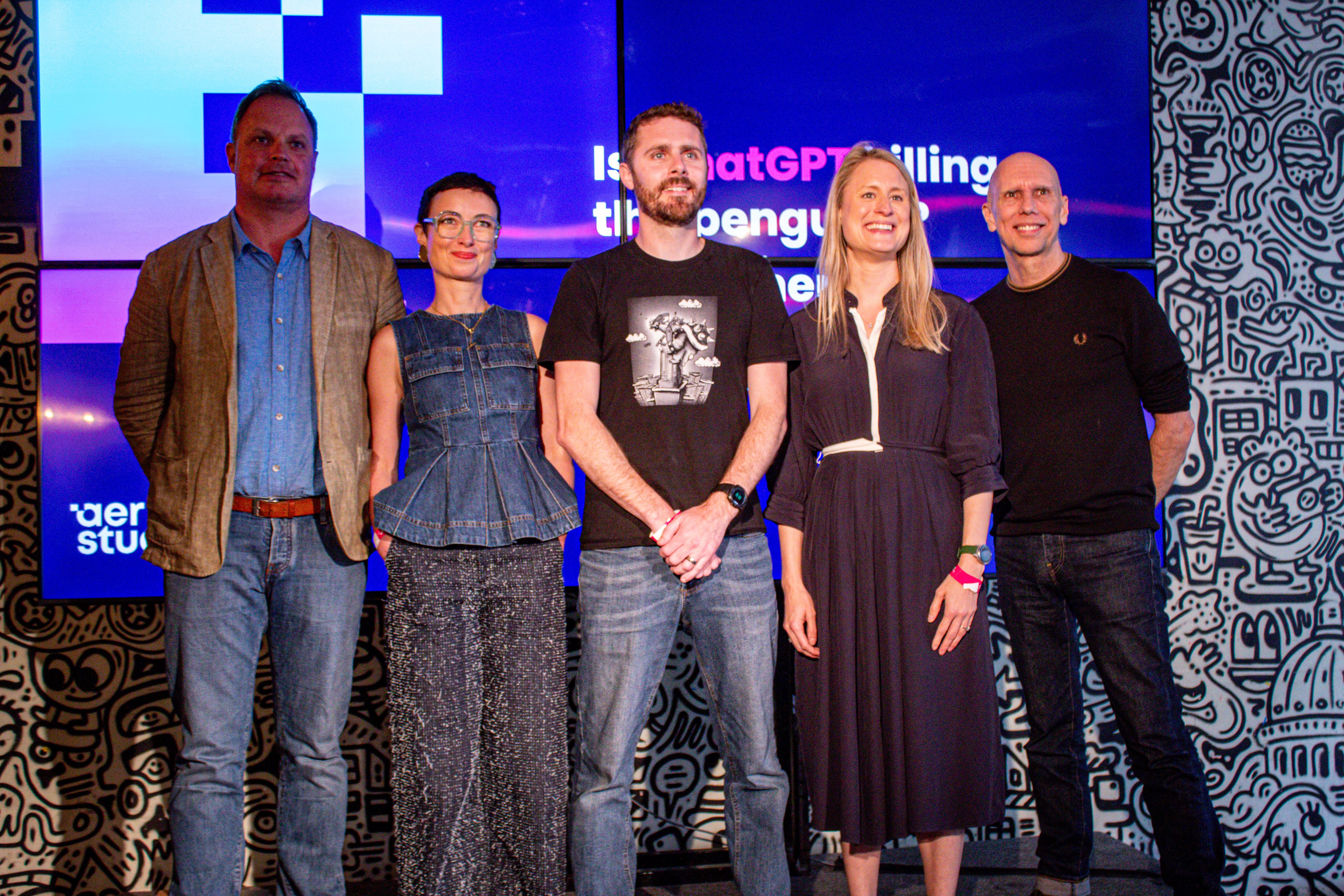
Something that our team is passionate about is being part of a wider community and ecosystem. We take an ‘open source’ approach to our knowledge and skills, and actively get stuck into collaborating, contributing and coaching. Over the last couple of years I’ve spoken on stages across the UK and beyond, teamed up with other forward-thinking organisations to use innovative tech and joined the Umbraco sustainability committee.
This year, we have even more planned, as we broaden our range of events beyond the South West and I’m excited about it. If there’s somewhere we should be, I’d love to hear about it.
We believe that we’re stronger together. If there’s an idea to be discussed, a speaking opportunity to share thinking or a chance to support like-minded organisations, we’d love to chat.
6. Bringing in the next generation
Of course, we all started somewhere, yet the industry we work in is competitive and increasingly difficult to get a foot in the door. Our team is committed to helping make a difference, and are actively involved in supporting young people’s prospects.
As an organisation, Aer Studios, is involved in a number of initiatives, from Kerning the Gap, which supports women in the creative industries, to signing up to mentor and host interns through start up Not Impossible.
Our work in this area starts at school age though, and I’ve been privileged to take part in a range of school visits to talk to pupils about the tech industry and what it takes to get started. I’ve also joined up with Cyberfirst, and last year delivered the Christmas lecture on AI to over 500 secondary school students at Bristol Cathedral. The questions, curiosity and smart ideas from younger people never fail to impress me, and I’m determined to help them succeed as they take steps into their career journeys.
I want to help younger people from all backgrounds to have the opportunity to be part of the next generation of creative technologists, and Aer Studios are committed to supporting in practical ways to make that happen.
The why behind it all
Two years in at Aer Studios, and I feel very fortunate to be part of creating real change and real impact for such a stellar line-up of clients.
Stepping into the Chief Technology Officer role isn’t a move I’ll be taking lightly. There’s a real forward momentum to everything we’re doing here, but what drives it is all of the areas I’ve talked about above.
There’s never been a more exciting, chaotic and challenging time to be working in technology, but in embracing all of this, and balancing experimentation and action with good judgement, I do believe we can contribute to the missions that really matter.
James Hobbs is Chief Technology Officer at Aer Studios. He has nearly two decades of experience working with organisations including Dyson, the BBC, Royal Navy, UK Government, Honda and others building digital products and platforms.